
Tembo Safari, day by day
Southern Africa Explorer · Private, guided · Starts and ends in Windhoek
Windhoek → Sossusvlei → Swakopmund → Spitzkoppe → Damaraland → Etosha → Divundu → Livingstone → Kasane → Maun → Mamuno
Numbered in order of overnight stops. Roads are indicative.
The route
Where you sleep each night, and about 3,870 km of driving in total.
- Windhoek1 night
- Sossusvlei1 night
- Swakopmund2 nights
- Spitzkoppe1 night
- Damaraland1 night
- Etosha area2 nights
- Divundu, Caprivi1 night
- Livingstone, Zambia1 night
- Kasane, Botswana1 night
- Maun, Botswana2 nights
- Ekori Lodge, Mamuno1 night
- Windhoek1 night
- Back in WindhoekDay 16
Day by day
What each day looks like on the road. Every trip is private, so the pace, stops and extras can change to suit you.
Day 1
Arrival in Windhoek
- Where you sleep
- Windhoek, 1 night
Arrive at Hosea Kutako International Airport, meet your guide and settle into Windhoek. Evening briefing on the route ahead.
What to expect
Your guide meets you at Hosea Kutako International Airport and drives you into Windhoek, about 45 km to the west through open bush and hills.
The rest of the day is yours to settle in after the flight. Windhoek is small and easy-going, and a quiet afternoon here is a good way to adjust to the dry air and the altitude before the road trip begins.
In the evening your guide runs through the route and the days ahead. It’s a good moment to talk about driving days, what you most want to see and anything you’d like to change.
Highlights
- Meet your guide on arrival
- Evening briefing on the route ahead
Day 2
Windhoek to Sossusvlei
- Where you sleep
- Sossusvlei, 1 night
- Drive
- Windhoek to Sossusvlei: about 310 km, 5 hours
Down the escarpment into the Namib sand sea, arriving in time for sunset over the dunes.
What to expect
You leave Windhoek in the morning and head south-west through the central highlands: farmland, camel-thorn trees and, often, kudu or oryx near the road.
Then the road drops down the escarpment and the country opens up into the Namib. Much of the way is on gravel, with stops for photos and to stretch your legs.
You arrive near the Sesriem gate in the afternoon, in time to watch the dunes turn from orange to deep red at sunset. Nights here are very quiet, and on a clear night the stars are worth staying up for.
Highlights
- The descent from the highlands into the Namib
- Sunset over the dunes
Optional extras
Not included. You can add these when planning.
- A short walk into Sesriem Canyon, if time allows
Days 3–4
Sossusvlei to Swakopmund
- Where you sleep
- Swakopmund, 2 nights
- Drive
- Sossusvlei to Swakopmund: about 350 km, 5.5 hours
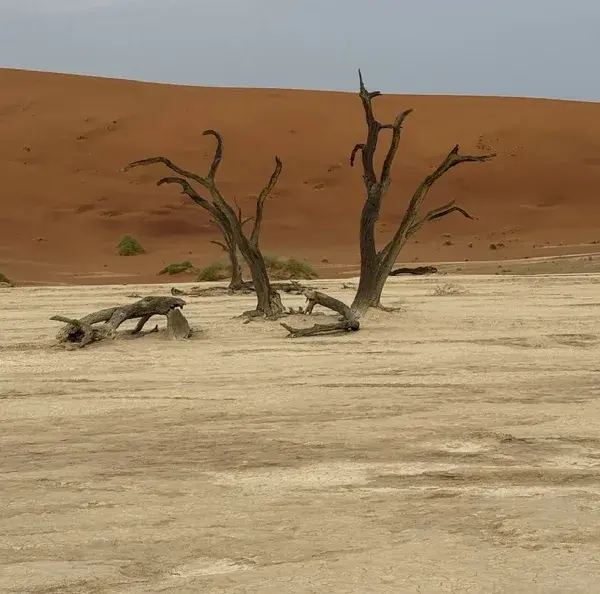
A morning in Sossusvlei and Deadvlei, then two nights on the coast with a free day in Swakopmund.
What to expect
The first morning starts early in the dunes. You enter the park at first light, when long shadows fall across the red sand, and walk about a kilometre to Deadvlei, a white clay pan of dead camel-thorn trees hundreds of years old. There’s time to climb a dune if you want the view.
By late morning it’s time to leave the desert. The drive north-west crosses the Tropic of Capricorn and winds through the Gaub and Kuiseb canyons before the long, open run to Swakopmund. You arrive in the late afternoon to cool sea air.
The next day has no long drive. Swakopmund is a small seaside town of palm-lined streets, German colonial buildings, a jetty and a beach promenade, and it’s easy to explore on foot.
It’s also the day to add an excursion if you’d like one: the dunes of Sandwich Harbour, where the desert meets the Atlantic, or a boat on the Walvis Bay lagoon to see seals, pelicans and flamingos. Or simply take it slowly.
Highlights
- Sunrise light on the dunes of Sossusvlei
- Deadvlei’s dead camel-thorn trees
- The Gaub and Kuiseb canyons
- A free day on the coast at Swakopmund
Optional extras
Not included. You can add these when planning.
- Sandwich Harbour 4x4 excursion, where the dunes meet the ocean
- Catamaran cruise on the Walvis Bay lagoon
- Quad biking or a skydive over the dunes
Day 5
Swakopmund to Spitzkoppe
- Where you sleep
- Spitzkoppe, 1 night
- Drive
- Swakopmund to Spitzkoppe: about 150 km, 2 hours
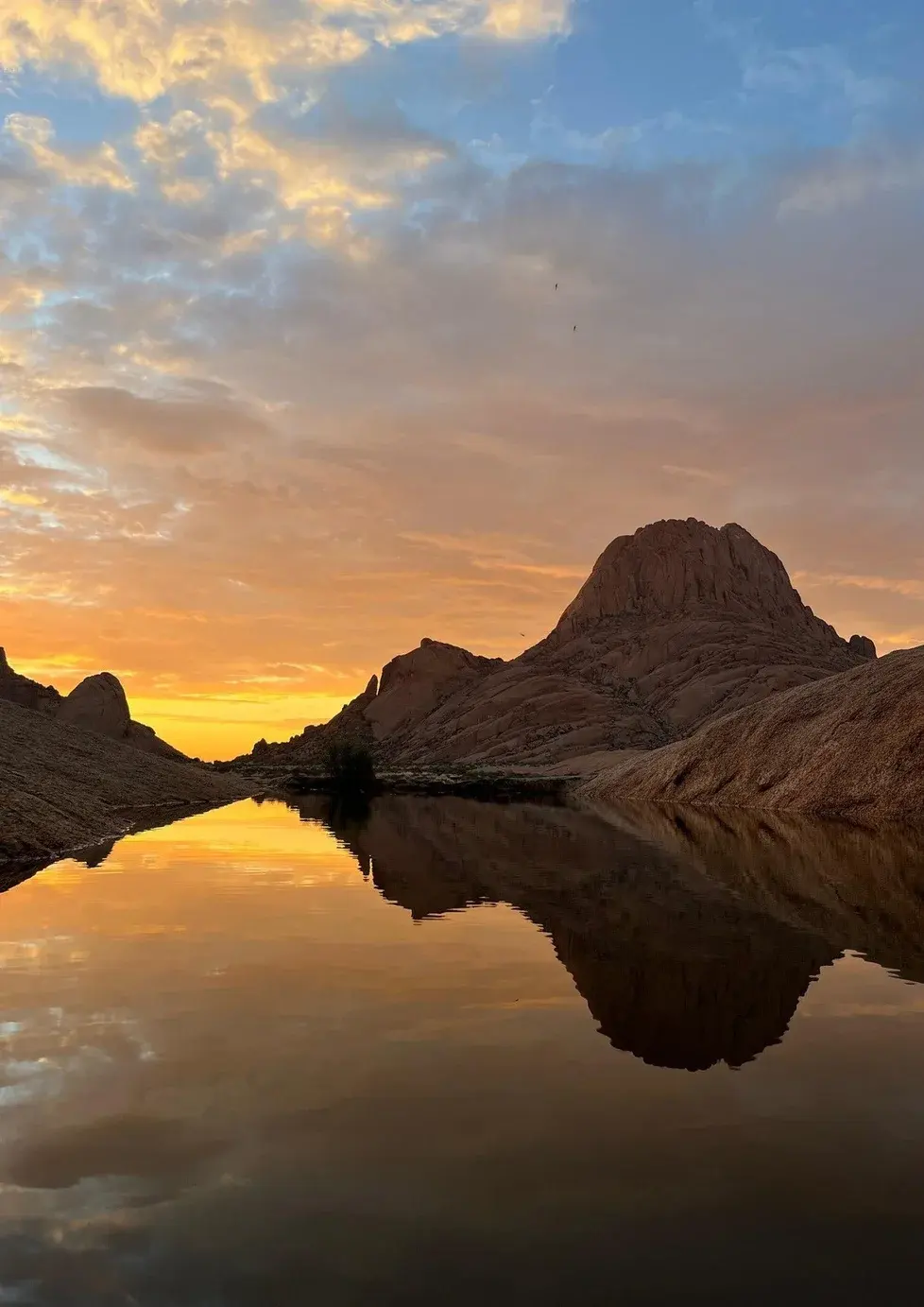
Inland to the peaks of Spitzkoppe, with a sunset walk among the boulders.
What to expect
A short drive inland across the gravel plains. Spitzkoppe appears long before you reach it: a cluster of granite peaks rising about 700 metres above the flat desert floor.
After settling in there’s time to explore. Walk to the natural rock arch and see the San rock paintings tucked among the boulders. Our founders spent much of their childhood around these rocks, and we know the quiet corners.
Late in the day the granite glows orange and red. Spitzkoppe is one of the best places in Namibia for sunset, and after dark the sky fills with stars.
Highlights
- The natural rock arch
- San rock paintings among the boulders
- Sunset at Spitzkoppe
Optional extras
Not included. You can add these when planning.
- A guided scramble or an introductory climb with our climbing guides
Day 6
Spitzkoppe to Damaraland
- Where you sleep
- Damaraland, 1 night
- Drive
- Spitzkoppe to Damaraland: about 230 km, 4 hours
Through Damaraland’s ancient valleys, rock engravings and desert-adapted wildlife.
What to expect
Heading north, the road leaves the granite behind for the wide valleys and flat-topped mountains of Damaraland. It’s one of Namibia’s most open landscapes: red rock, pale grass and very few people.
Look out for welwitschia, a strange two-leaved desert plant that can live for well over a thousand years. Damaraland is also home to desert-adapted elephant, which follow the dry riverbeds. Sightings are never guaranteed, but your guide will know where they have been seen recently.
The region is rich in rock art. The engravings at Twyfelfontein, made by hunter-gatherers thousands of years ago, are a World Heritage Site. Evenings are quiet, with big skies and a real sense of distance.
Highlights
- Table-top mountains and wide valleys
- Welwitschia plants
- A chance of desert-adapted wildlife
Optional extras
Not included. You can add these when planning.
- A visit to the rock engravings at Twyfelfontein
- A guided drive to look for desert-adapted elephant
Days 7–8
Damaraland to Etosha
- Where you sleep
- Etosha area, 2 nights
- Drive
- Damaraland to Etosha: about 240 km, 3.5 hours
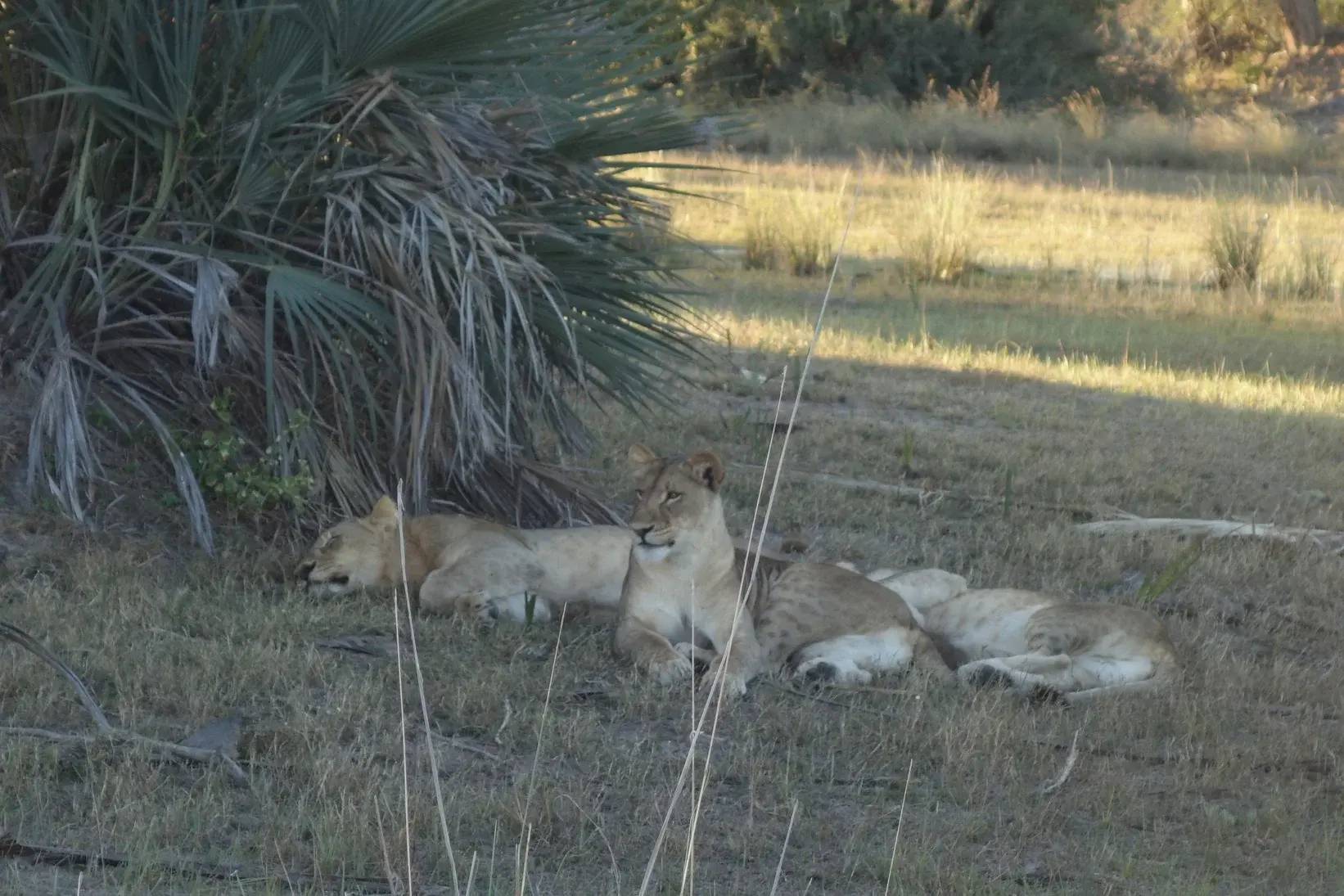
Two days of game viewing around the waterholes of Etosha National Park.
What to expect
The first day you drive north-east out of Damaraland, through mopane woodland and cattle country, and reach Etosha National Park in time for an afternoon game drive as the heat eases.
The second day is all wildlife. Etosha is built around a vast white salt pan, and the springs and waterholes along its edge draw animals in from the plains. You set out early, when the air is cool and animals are moving, and often wait quietly at a waterhole as elephant, zebra, giraffe, springbok and oryx come and go.
Lion and black rhino live here too, and with luck you may see leopard or cheetah. The middle of the day is hot and slow, a good time to rest, before heading out again in the late afternoon light.
Highlights
- An afternoon game drive on arrival
- A full day at Etosha’s waterholes
- Elephant, zebra, giraffe and large herds of plains game
- A chance of lion and black rhino
Day 9
Etosha to Divundu
- Where you sleep
- Divundu, Caprivi, 1 night
- Drive
- Etosha to Divundu: about 620 km, 8–9 hours (long driving day)
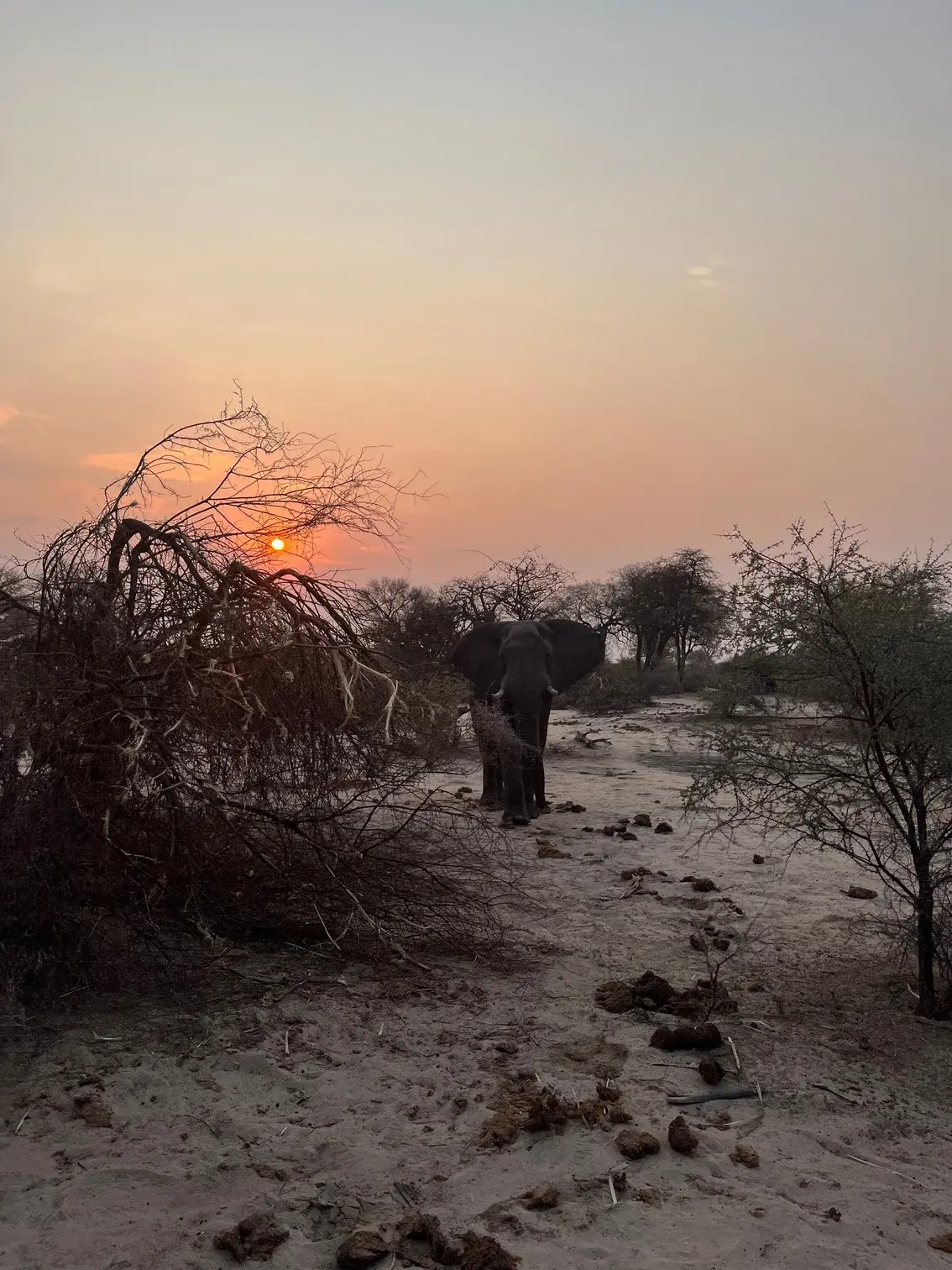
A long drive east into the Caprivi Strip and the wetlands of the Kavango River.
What to expect
The longest drive of the trip, so you leave early. The road runs east via Tsumeb and Grootfontein to Rundu on the Kavango River, which forms the border with Angola, then follows the river towards the Caprivi Strip.
The country changes completely along the way: dry bush gives way to tall woodland, villages and fields, and finally wide floodplains and riverine forest.
Divundu sits on the Kavango close to the rocky rapids of Popa Falls. After a long day, an evening by the river, with hippo calling in the dark, is a good reward.
Highlights
- The Kavango River and its floodplains
- The Popa Falls rapids nearby
Optional extras
Not included. You can add these when planning.
- A sunset boat trip on the Kavango, where available
Day 10
Divundu to Livingstone
- Where you sleep
- Livingstone, Zambia, 1 night
- Drive
- Divundu to Livingstone: about 430 km, 5.5–6.5 hours incl. border
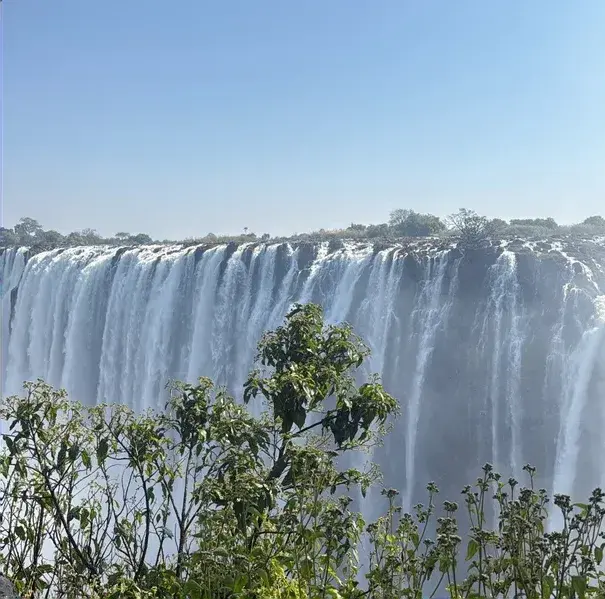
Cross into Zambia and continue to Livingstone for Victoria Falls.
What to expect
East through Bwabwata National Park, where the main road crosses wildlife country and elephant are often seen near the road. We know this region well from years of guiding in the Caprivi.
At Katima Mulilo you leave Namibia and cross into Zambia, then follow the Zambezi towards Livingstone. Border formalities take time; we handle the vehicle paperwork and permits.
Livingstone is a lively town a short drive from Victoria Falls, where the Zambezi drops into a gorge more than a kilometre and a half wide. Paths opposite the main falls lead through the rainforest the spray keeps green. Your quotation sets out how your time here is spent.
Highlights
- Bwabwata National Park
- Crossing into Zambia
- Victoria Falls, a short drive from Livingstone
Optional extras
Not included. You can add these when planning.
- A sunset cruise on the Zambezi above the falls
Day 11
Livingstone to Kasane
- Where you sleep
- Kasane, Botswana, 1 night
- Drive
- Livingstone to Kasane: about 80 km, 2–3 hours incl. border
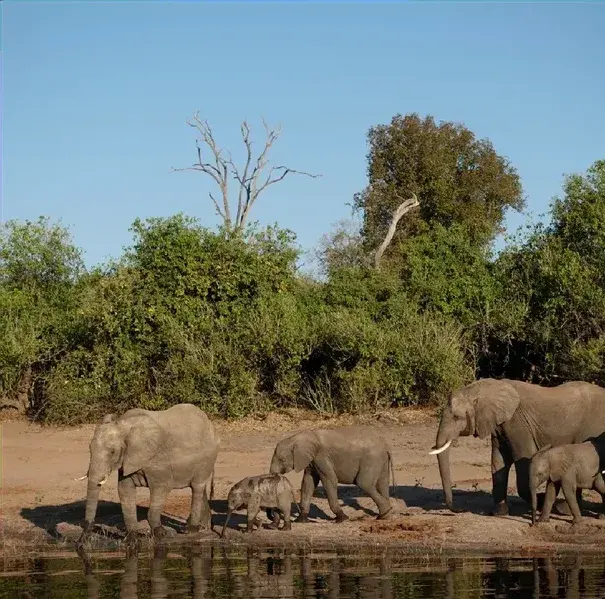
Over the Kazungula bridge into Botswana for an afternoon elephant cruise on the Chobe River.
What to expect
A short drive west to Kazungula, where a bridge across the Zambezi takes you into Botswana, close to the point where Zambia, Botswana, Zimbabwe and Namibia almost meet.
Kasane is the gateway to Chobe National Park, known for one of the largest elephant populations in Africa.
In the afternoon you head out on the Chobe River. From the water you watch elephant herds come down to drink and swim, alongside hippo, crocodile, buffalo and a remarkable variety of birds.
Highlights
- The Kazungula bridge into Botswana
- Afternoon wildlife cruise on the Chobe River
- Elephant herds on the riverbank
Days 12–13
Kasane to Maun
- Where you sleep
- Maun, Botswana, 2 nights
- Drive
- Kasane to Maun: about 620 km, 8–9 hours (long driving day)
South-west to Maun, then a full day at the edge of the Okavango Delta.
What to expect
Another long drive, south through northern Botswana’s bush to Nata, then west along the edge of the Makgadikgadi salt pans to Maun. Elephant cross this road often, so the pace is steady and careful.
Maun sits on the Thamalakane River at the south-eastern edge of the Okavango Delta, where the Okavango River spreads into a maze of channels, lagoons and islands in the Kalahari sand.
The second day is a full day here, with no driving: time to rest after the long road and to see the Delta.
Highlights
- The Makgadikgadi pans on the way south
- A full day at the edge of the Okavango Delta
Optional extras
Not included. You can add these when planning.
- A scenic flight over the Okavango Delta
- A mokoro (dugout canoe) trip on the Delta waterways
Day 14
Maun to Ekori Lodge
- Where you sleep
- Ekori Lodge, Mamuno, 1 night
- Drive
- Maun to Ekori Lodge: about 510 km, 6–7 hours
West across the Kalahari to the Namibian border, overnighting at Ekori Lodge.
What to expect
West out of Maun and across the Kalahari through Ghanzi on the long, straight Trans-Kalahari road. The country is flat and open: red sand, thorn scrub and very big skies.
You overnight at Ekori Lodge near the Mamuno border post, ready for an easy crossing back into Namibia in the morning.
Highlights
- The Kalahari on the Trans-Kalahari road
- A night near the Mamuno border
Day 15
Ekori Lodge to Windhoek
- Where you sleep
- Windhoek, 1 night
- Drive
- Ekori Lodge to Windhoek: about 330 km, 4–5 hours incl. border
Cross back into Namibia and return to Windhoek for a last night in the city.
What to expect
Cross back into Namibia at Mamuno, then drive west through Gobabis and cattle country, climbing gently back up to Windhoek.
You arrive in Windhoek in the afternoon with a last night in the city, so there’s no rush to the airport after a long road trip. It’s a good evening to look back over sixteen days and four countries.
Highlights
- Back into Namibia at Mamuno
- A last night in Windhoek
Day 16
Airport transfer and departure
- Where you sleep
- No overnight: the journey ends today
Transfer to Hosea Kutako International Airport for your flight home.
What to expect
A relaxed final morning. Your guide drives you the 45 km out to Hosea Kutako International Airport in time for your flight home.
Tell us your flight time when planning and we’ll arrange the transfer around it.
What’s included
Included
- Safari planning, with the route tailored to your interests and travel preferences
- A professional guide accompanying you throughout your safari
- A private safari vehicle suited to your chosen route
- Transport between destinations, including vehicle hire and fuel
- Accommodation for the number of nights specified in your itinerary
- Guided sightseeing, game drives and activities listed as included
- Meals and refreshments where specified in your itinerary
- Park and attraction entrance fees where specified as included
- Arrival and departure transfers where included in your travel plan
- Coordination of accommodation and included activity bookings
- Required vehicle permits and documentation for cross-border itineraries
- Assistance from our team before and throughout your trip
Not included
- International and domestic flights unless specified as included
- Visa fees, passport costs and other personal travel documents
- Personal travel and medical insurance
- Meals and drinks not listed as included
- Optional activities and excursions
- Park and attraction fees not listed as included
- Laundry, souvenirs and other personal expenses
- Gratuities for guides and lodge staff
These are general guidelines for our safaris. Your detailed trip PDF and quotation will confirm the accommodation, transport, meals, activities, transfers and entrance fees included in your particular journey.
Good to know
- Crosses into Zambia between Divundu and Livingstone, into Botswana over the Kazungula bridge, and back into Namibia at the Mamuno border. We handle the vehicle paperwork and permits; visa fees are not included.
- The longest driving days are Etosha to Divundu (about 620 km) and Kasane to Maun (about 620 km).
- Distances and driving times are approximate and may vary with road and border conditions.
Plan this trip
Tell us your dates and group size for the Tembo Safari. We reply personally with a route, accommodation options and a quote.